The Land & Its People · Alto Alentejo
Roman Ammaia
A lost city at the foot of the sierra
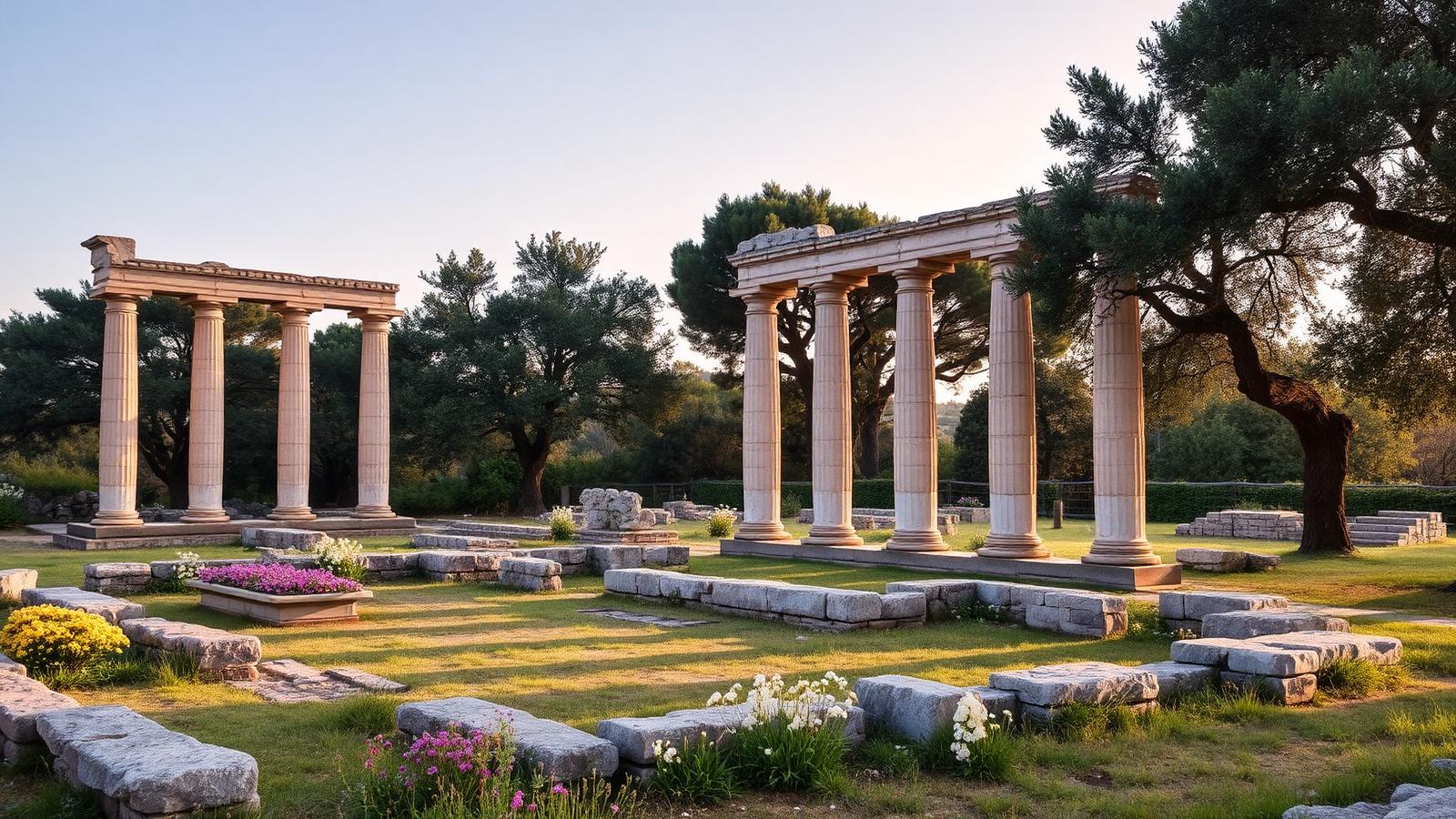
At the foot of the Serra de São Mamede, on a gentle slope by the River Sever, lies a whole Roman town. Ammaia rose in the 1st century where several Roman roads crossed, won the rank of municipium, and thrived on the land's resources, with the crest of Marvão above it for a backdrop.
Then it declined, was abandoned, and was largely lost — its very identity forgotten until the 20th century. Today it's an open archaeological site with a museum, still being uncovered.
What you'll see
The excavated heart: the monumental South Gate with its broad tower bases and a four-metre-wide causeway running in; the Forum and temple, its podium of Roman concrete still rising from the ground; and the baths. The on-site museum (in the Quinta do Deão) holds the finds — including one of the most important collections of Roman glass in the Iberian Peninsula. A recently identified amphitheatre adds to the story.
Opening hours and on-site details — to confirm.
The threads that lead out
Ammaia's stones outlived the city: in 1710 the still-standing arch of its South Gate was carried to Castelo de Vide, where it stood in use until 1891. And among the finds, a gem engraved with a menorah hints that the Jewish presence here reaches back to Roman times — long before the medieval Judiaria. The town's name echoes on, too: the 9th-century chief Ibn Maruán, lord of "the fortress of Ammaia", gave his name to nearby Marvão.
Where the birds come in
This is the Sever valley — the Black Stork's quiet water, the montado raptors overhead — the same river that fed a Roman city now feeds the birds.
Plan your visit