Species
Black Stork
Ciconia nigra
The shy cousin of the rooftops
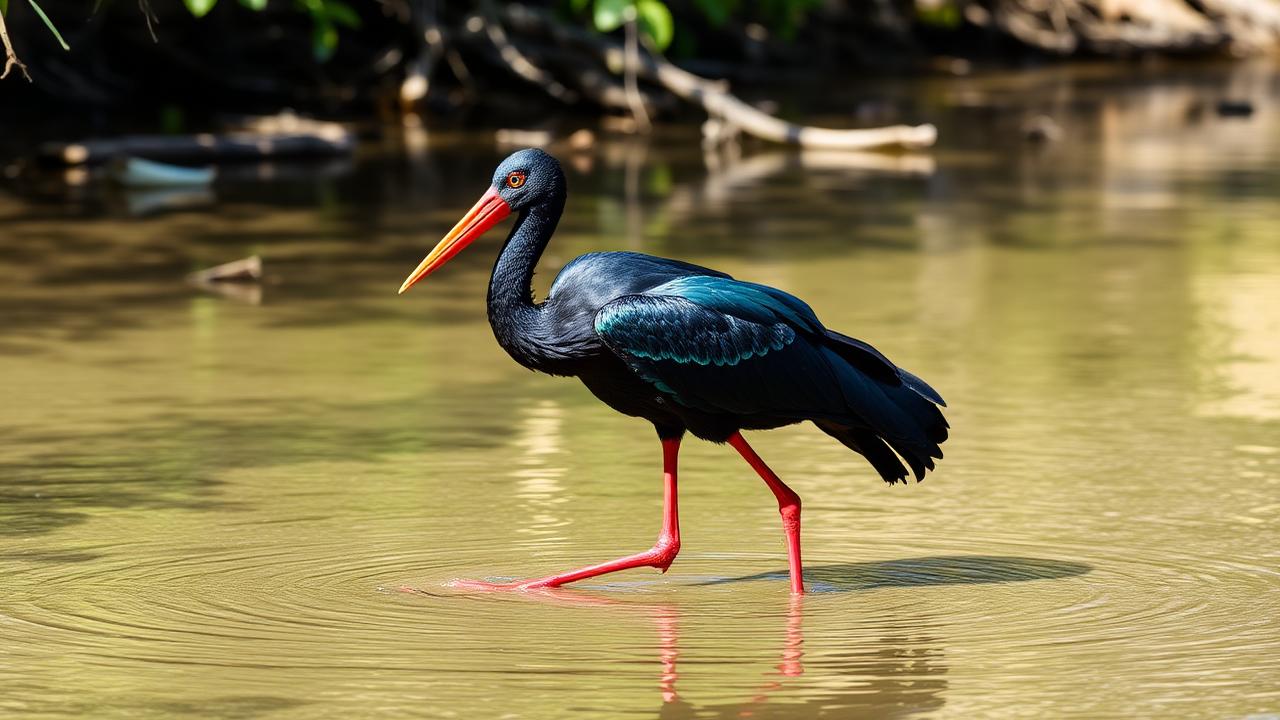
Everyone knows the White Stork on the chimney. Far fewer ever see its dark, secretive relative — the Black Stork, a bird of quiet water and lonely cliffs, and one of the genuine rewards of birding this country.
Where & when to see it here
A summer visitor (roughly March to September, with a few now lingering later), best looked for along the Serra de São Mamede's quieter river reaches — the Sever and the streams — and at the margins of the Póvoa e Meadas reservoir, where it feeds.
Field marks & behaviour
Glossy black with a clean white belly, and red bill and legs; unlike the sociable White Stork it is wary and solitary, slipping away if approached. It fishes shallow, undisturbed water and nests on cliff ledges and in large old trees, away from people.
Why the Alto Alentejo
It is one of the cliff-nesting species the park is monitored for, and a named target on guided outings around Castelo de Vide and Marvão. Its shyness is the point: it needs the quiet, unspoiled water that this corner still has — the same untouched river that drew people to settle the valleys keeps the Black Stork here.
Plan your visit
Walk the same ground as the black stork.
The newsletter
What's flying now
A short, seasonal note from the Serra — what to listen for, what's passing through.