A place to bird · Alto Alentejo
The Elvas Plains
Bustards, sandgrouse and a winter of cranes — on the open frontier
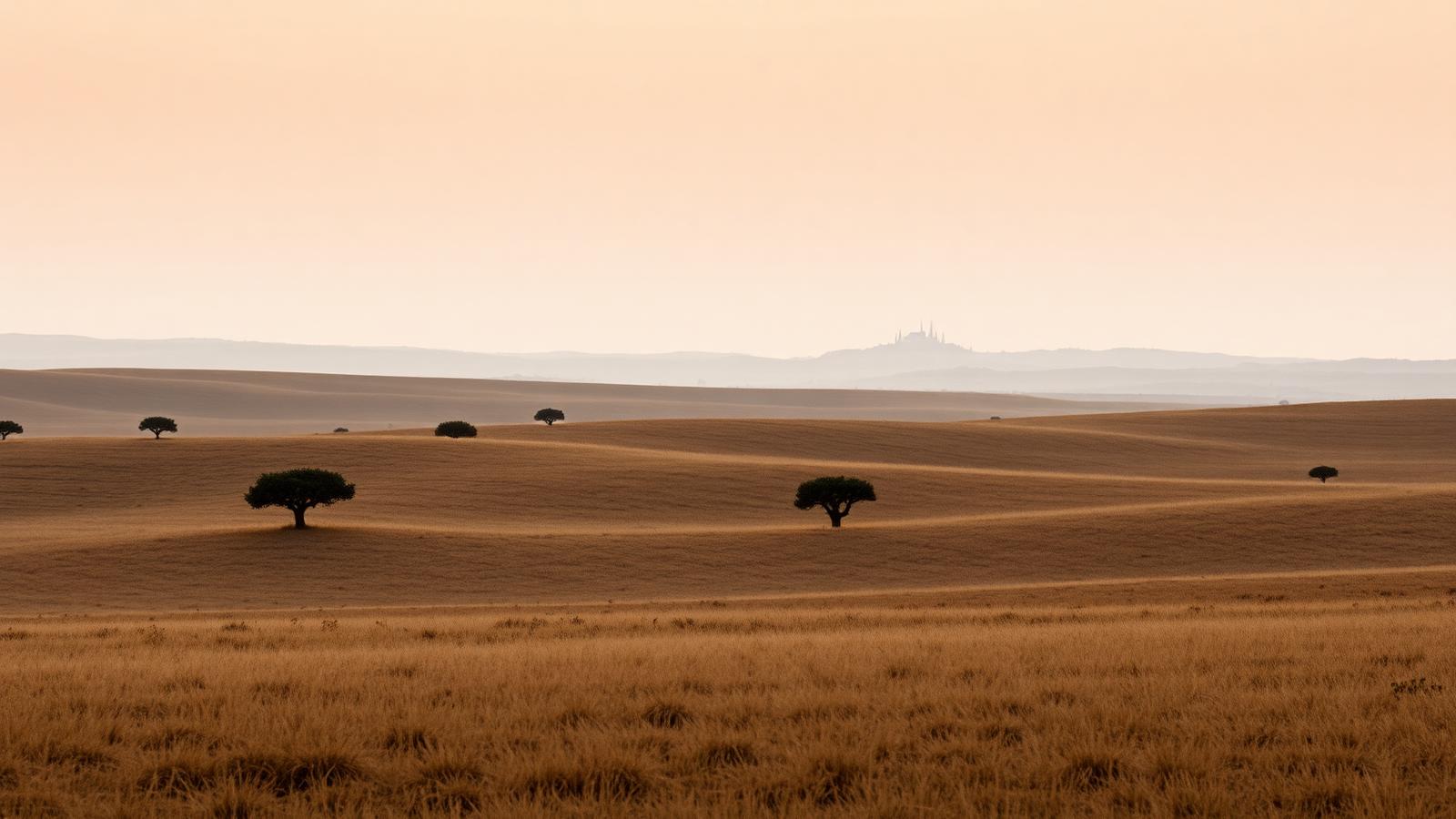
An hour south of Castelo de Vide the hills fall away and the land opens out: a vast, level country of cereal, fallow and montado, running flat to the Spanish border. This is steppe-bird country — the open ground the lowland mountains can't offer, and the reason a stay based in the sierra still belongs on every serious Iberian list. Here are the birds people travel for: the Great Bustard, the Little Bustard, the Black-bellied Sandgrouse.
And the same openness that lets a bustard throw its spring display across a kilometre of stubble is the openness that made this the most fortified frontier in Iberia. Flat, far-seeing ground is a bird's stage and a soldier's field of fire at once. You come for the steppe; you find yourself between star-shaped fortresses and a border hamlet on a hill — the land read two ways, by birds and by armies, for the same reason.
The newsletter
What's flying now
A short, seasonal note from the Serra — what to listen for, what's passing through.
Where it is
Map — to come
The plains spread around Elvas and Campo Maior. From your base in Castelo de Vide it's about an hour to the south — but, driven at the right pace, that hour is the opening act of the day's birding, not the commute to it (see The approach, below).
- From Castelo de Vide
- Route & timing — to come
- Coordinates
- A starting point on the plain — to come
- Driving the tracks
- Which rural lanes work, and where not to enter — to come
The approach: a road of storks
Don't think of the hour from Castelo de Vide as transit to be shortened. Driven well, it's the first hour of birding. The EN246 between Portalegre and Arronches is a road of White Storks — a nest on every pole, roadside tree and ruin, the birds standing tall and all turned the same way into the wind, the platforms now comically small for their crowded families of near-grown young. Held to a steady 90, with places to pull over safely, it's a road that rewards the unhurried driver. (That the storks build as readily on a broken wall as on a tree is the whole story of this country in miniature — the birds and the history sharing the same ground.)
And the timing arranges itself. Leave around first light and come back in the late afternoon — the two best hours for birds and for the long, low Alentejo light — and the outward and homeward drives become two scenic passages that frame the day rather than interrupt it. This is the quiet case for sleeping in the sierra instead of beside the plain: you don't shorten the journey, you collect it.
What you'll see
This is steppe and open-country birding — much of it watched from the vehicle, scanning the flat distance. The birds people come for:
- Great Bustard →
The prize. Europe's heaviest flying bird; in early spring the males inflate into great white blooms of feather to display.
- Little Bustard →
Easiest in spring, the male's dry rattling call carrying over the grass.
- Black-bellied Sandgrouse →
Harder — a bird of the barest ground; listen for the bubbling flight call before you see them.
Around and alongside them, the cast of the open plain: Lesser Kestrel, Montagu's Harrier quartering low, Black-winged Kite (Elvas is exceptionally reliable for it), Calandra Lark, European Roller on the wires in summer, Stone Curlew, Collared Pratincole, and Great Spotted Cuckoo.
In winter, the cranes. The Campo Maior plains are wintering ground for Common Crane — flocks on the stubble, bugling overhead at dusk. Add wintering Red Kite, harriers and golden plover, and the cold months become a season in their own right, not an off-season.
Down at the Caia reservoir, the water brings a different list — Gull-billed Tern (a breeding colony), White Stork, Spoonbill, egrets and wildfowl — a natural second stop.
Best time & light
- March to April is the peak: bustards displaying, the plain green and flowered, summer visitors (roller, pratincole, lesser kestrel) arriving.
- November to February for the cranes and wintering raptors — clear, low light, big skies.
- Early morning rules — the birds feed and display at first light, and by midday in spring and summer the plain shimmers in heat haze and the birds settle. Go early, scan slow.
- High summer middays are punishing and quiet; the plain turns near-desert by August.
See the full month-by-month picture on the Seasonal calendar →
On the ground: three ways in
The plain itself
Birding here is patient, road-and-track work: drive slowly, stop often, scan the far ground with a scope. Stay on the public tracks, watch from the vehicle (it's the best hide), and never walk out toward a displaying bustard.
Specific tracks — to come.
The Caia reservoir
A change of habitat and a change of list — water, terns, storks and waders — and an easy pairing with a morning on the dry plain.
Ouguela
A tiny fortified hamlet on a rise above the Xévora, near Campo Maior — birding the border country with a medieval watchpost at your back. The plains roll into Spain from here.
Pair it with
The fortified frontier
The reason the birds have this much open ground is the same reason the ground was fought over: it sees forever. Make the history half of the day:
- Elvas →
The UNESCO-listed garrison town: the largest bulwarked (star-shaped) fortification in the world, the great Amoreira aqueduct striding across the valley, and the outlying forts of Santa Luzia and Graça.
- Caia reservoir →
A wetland counterpoint to the dry plain — terns, storks, waders and wildfowl.
- Back in the sierra: Castelo de Vide →
Return to Castelo de Vide and Marvão, and the two landscapes of the trip close around you.
The open horizon that carries the bustard's display is the open horizon the fortress was built to command. Never separate them.
Make it a trip
The plains, the sierra and a medieval town to sleep in — one base, two landscapes.
We'll fold an Elvas plains morning into a stay across our three houses, timed for the bustard display in spring or the cranes in winter.