A place to bird · Alto Alentejo
Birding around Castelo de Vide
Start at the doorstep — storks on the towers, a lake down the road
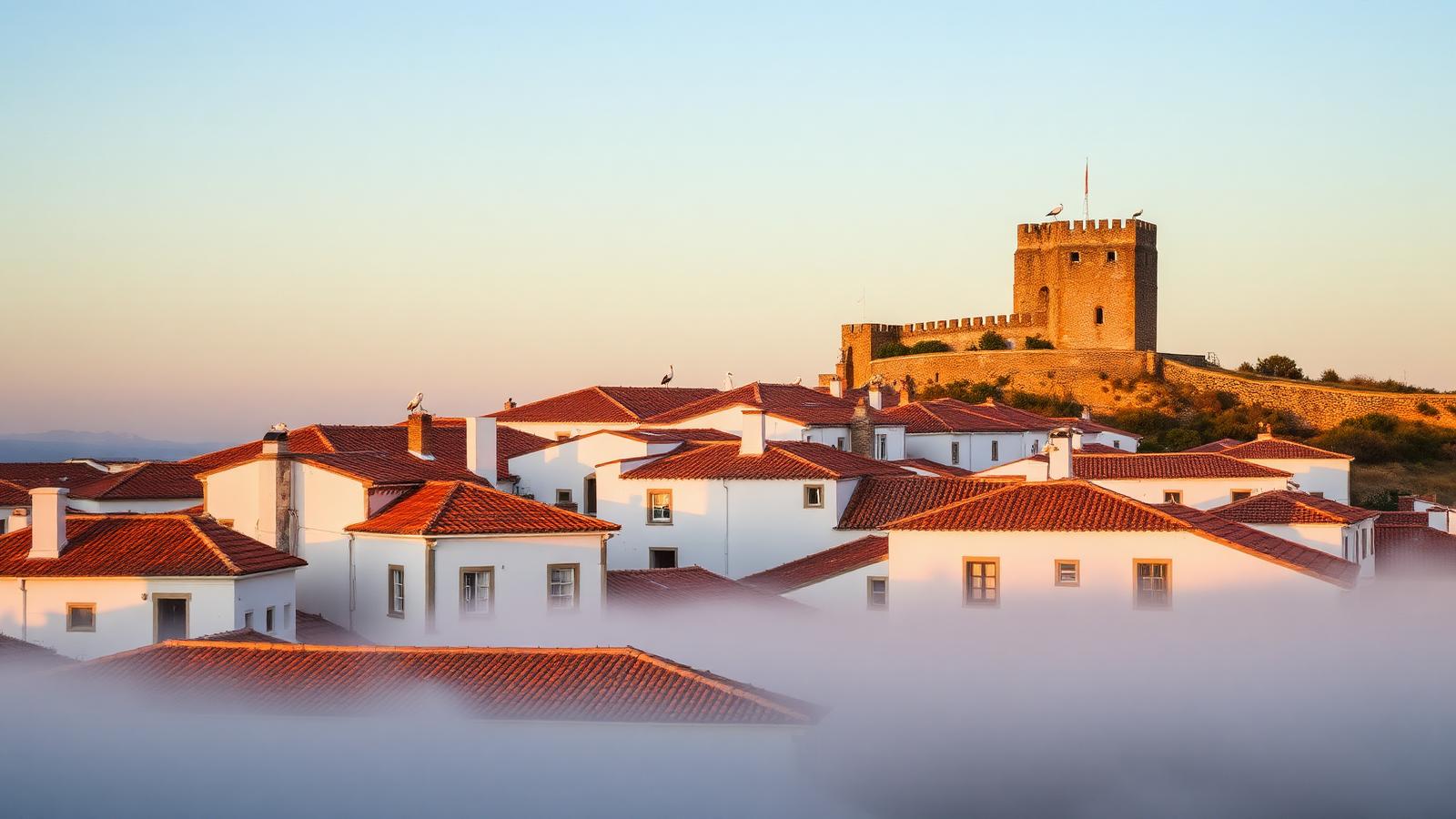
The best thing about basing here is that the birding starts before you've left. Castelo de Vide is one of the richest corners of inland Portugal for birds, and the town itself is the first hide: you wake to swifts screaming round the castle, White Storks clattering on the chimneys, and the dry song of a Black Redstart from a wall that has stood for centuries.
Then, ten kilometres out, the county's own reservoir waits with a list of over 170 species. This is the gentle day — the first morning, or the restful one — and it never leaves the doorstep for long.
The newsletter
What's flying now
A short, seasonal note from the Serra — what to listen for, what's passing through.
In the town: birds in the stonework
You don't need a car for this. The medieval town is full of birds that have made the human fabric their own:
- White Stork on the towers, chimneys and rooftops — the most visible neighbours.
- Pallid and Common Swift screaming in summer arcs around the castle and the old walls; Crag Martin and Red-rumped Swallow working the same warm stone.
- Black Redstart — a true town bird here, nesting in nooks of walls and outbuildings.
- Iberian Azure-winged Magpie, Hoopoe, Serin, Spotless Starling and Blackcap in the gardens, the Fonte da Vila and the green edges of town.
The point is the overlap: these birds nest inside the heritage — in the castle walls, above the Jewish quarter, over the fountains. To watch them is already to read the town.
Down the road: the Póvoa e Meadas reservoir
Ten kilometres northwest, still inside the concelho, the Póvoa e Meadas reservoir is the local jewel — over 170 bird species recorded around a single lake. Framed by granite outcrops and Pyrenean-oak woods, it's a softer, water-and-woodland counterpoint to the open plains, and an easy local outing.
- On the water: Great Crested Grebe is the constant presence (winter flocks can reach into the dozens), with Great Cormorant and Grey Heron on the rocks.
- The margins and the Ribeira de Nisa hold Kingfisher, Little Ringed Plover, Common and Green Sandpiper, Little Egret.
- The riparian gallery is a songbird pocket: breeding European Robin (scarce in the Alentejo in summer), Nightingale, Cetti's Warbler, Wren, and Golden Oriole in May–June.
- The oak woods around belong to the Iberian Azure-winged Magpie; Short-toed Eagle and Common Buzzard hunt overhead; Dartford Warbler in the broom, Corn Bunting over the fields. The big eucalyptus by the dam carry White Stork nests, with a Spanish Sparrow colony beneath.
And the history is built into the ground here. The lakeside PR4 trail passes a rock-cut anthropomorphic grave, the Boa Morte necropolis, the old hydroelectric powerhouse below the dam — and a proper bird hide on the shore. Birds and archaeology on one circuit; the site does the entwining for you.
Best time & light
- March to June is the fullest: town swifts and martins back, the reservoir's breeders in song, the oak woods busy.
- Winter brings grebes and a few wildfowl to the water, and quiet, clear light over the town.
- Early morning in the streets, before the day warms — then the lake. Access and timing — to come.
See the full month-by-month picture on the Seasonal calendar →
Pair it with
The town and its past
This page barely needs a separate "history half": the birds are already in it. But to make the day whole:
- Castelo de Vide →
The castle, the medieval Judiaria (one of the most important medieval Jewish quarters in the country), the fountain-lined streets.
- Serra de São Mamede →
When you're ready to leave the doorstep: the raptor sierra at your back, half an hour up the road.
Around Póvoa e Meadas the PR4 trail's rock-cut grave, necropolis and old hydroelectric powerhouse sit alongside the bird hide — one circuit, two readings of the same ground.
Make it a trip
You're already here — this is the day that proves the base.
A morning in the streets, an afternoon at the lake, and dinner back where you started.
We'll build a doorstep day into your stay across our three houses — the easiest, and often the most surprising, of the trip.